
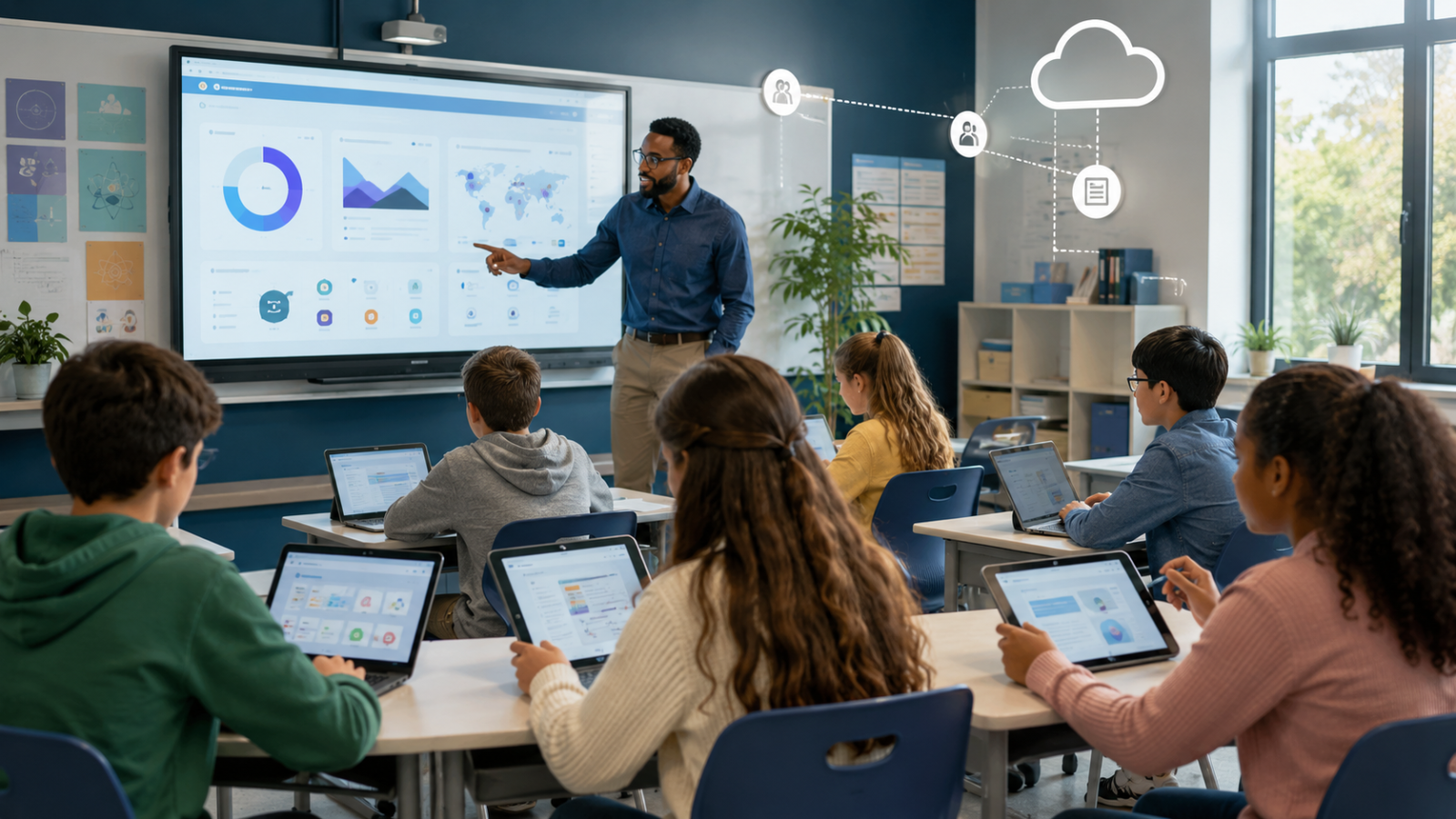
Digital technology has fundamentally reshaped nearly every aspect of modern life, and education is no exception. From elementary schools to universities, technology has quietly woven itself into the fabric of daily learning. The question is no longer whether schools use technology — it’s how deeply they depend on it, and what that dependence actually looks like in practice.
The Classroom Has Gone Digital
Walk into almost any school today and you’ll find digital tools front and center. Interactive whiteboards have replaced traditional chalkboards, and tablets or laptops are just as common as pencils in many districts. Teachers use digital platforms to deliver lessons, share resources, and assign homework, often without printing a single sheet of paper. Studies suggest that over 90% of K-12 schools in the United States now have broadband internet access, a figure that has grown dramatically over the past decade. The physical classroom has transformed into a blended environment where face-to-face instruction is consistently supported by screens, apps, and cloud-based tools.
Learning Management Systems Are Now Standard
One of the clearest indicators of schools’ reliance on technology is the near-universal adoption of Learning Management Systems (LMS). Platforms like Google Classroom, Canvas, and Schoology allow teachers to organize coursework, communicate with students, and track academic progress all in one place. Students log in to access assignments, submit work, and review feedback, often from home or on the go. These systems have made education more accessible and organized, though they also mean that a connectivity issue or server outage can bring a significant portion of the school day to a grinding halt. The convenience of an LMS is undeniable, but so is the institution’s growing dependence on its reliability.
Administrative Operations Run on Technology
Digital technology doesn’t just support instruction; it powers the entire administrative backbone of modern schools. Attendance tracking, grade reporting, scheduling, and even cafeteria payments are all managed through specialized software platforms. Schools increasingly use data analytics tools to monitor student performance trends and identify at-risk learners before small struggles snowball into serious problems. On the student affairs side, administrators rely on student conduct software to document case histories, ensure consistent policy enforcement across departments, and maintain accurate, accessible records. These digital systems reduce paperwork, improve record accuracy, and free up staff to focus more attention where it matters most — on the students themselves.
Remote and Hybrid Learning Proved How Deep the Reliance Goes
The COVID-19 pandemic served as an unplanned stress test for educational technology, and the results were eye-opening. When schools closed their physical doors in 2020, institutions that had already invested in digital infrastructure were able to pivot relatively quickly to remote learning. Video conferencing tools like Zoom and Microsoft Teams became essential overnight, and districts scrambled to provide devices and hotspots to students who lacked them at home. The experience exposed both the power and the inequities of digital reliance, with well-resourced schools maintaining continuity while others struggled significantly. Even after in-person learning resumed, many schools held onto hybrid and online elements, making it clear that remote-capable technology is now a permanent fixture in education.
Challenges and Concerns Around Digital Dependence
While the benefits are real, educators and policymakers are increasingly vocal about the challenges that come with deep digital reliance. Cybersecurity threats have become a serious concern, with schools reporting a rise in ransomware attacks and data breaches targeting sensitive student records. Screen fatigue, reduced attention spans, and the broader impact of constant device use on student wellbeing are topics generating genuine debate among researchers and parents alike. There’s also the persistent issue of the digital divide, where students from lower-income households may lack reliable devices or internet access at home. Striking the right balance between leveraging technology’s strengths and managing its risks remains one of the central challenges facing school leaders today.
Conclusion
Schools today are deeply, and in many ways irreversibly, reliant on digital technology. From classroom instruction and administrative management to student services and remote learning, technology underpins nearly every function a modern educational institution performs. That reliance brings tremendous opportunity to personalize learning, streamline operations, and better serve students. At the same time, it demands that schools invest seriously in infrastructure, cybersecurity, and equitable access to ensure no student is left behind. As technology continues to evolve, so too will the ways schools depend on it, adapt to it, and ultimately grow with it.