
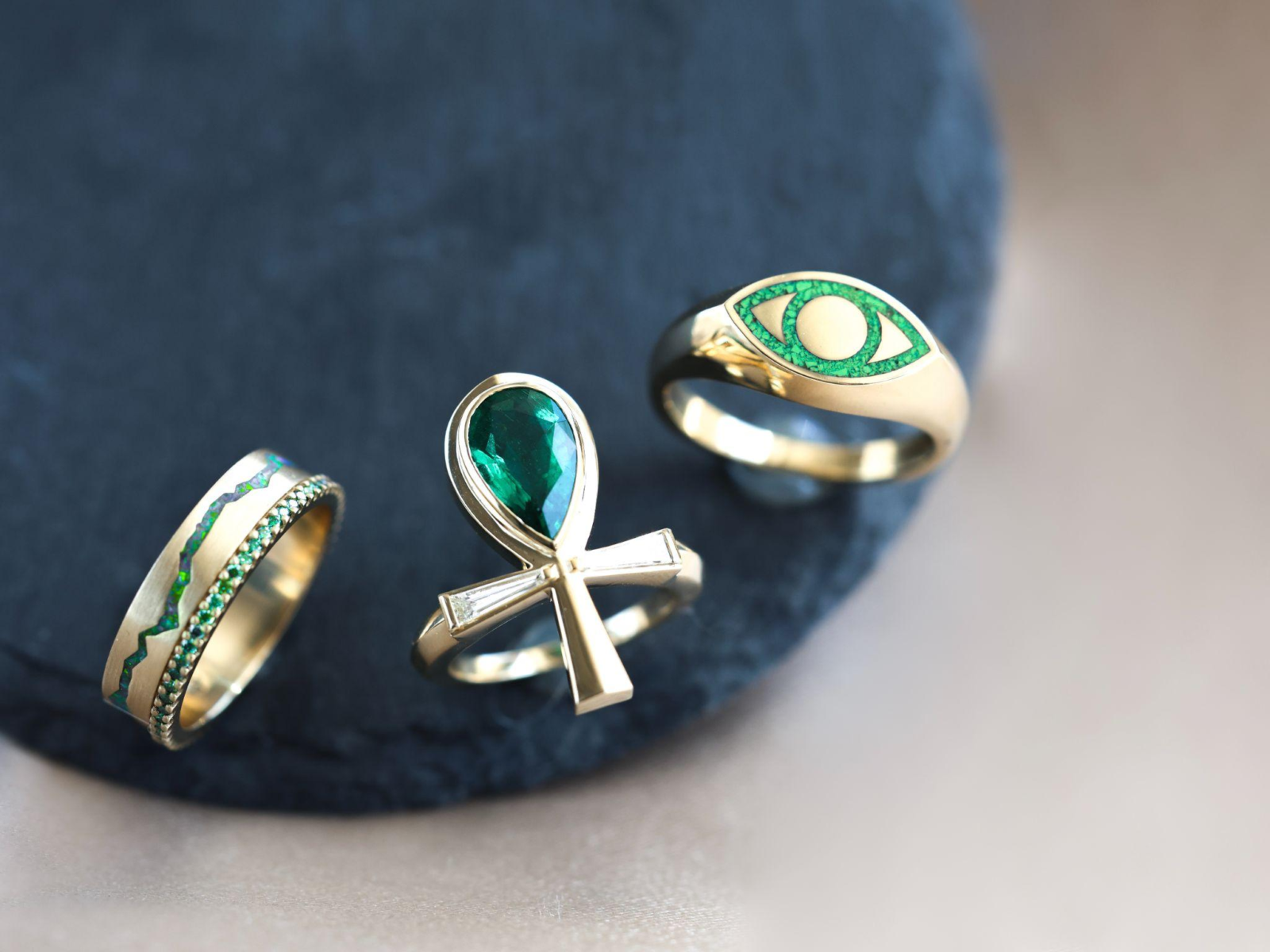
Ask ten people to picture an engagement ring and there’s a good chance most of them will imagine the same thing: a diamond on a simple band.
Then you actually start shopping and realize there are so many more options. Suddenly you’re looking at halo rings, three stone designs, vintage inspired settings, colored gemstones, botanical bands, salt and pepper diamonds, asymmetrical designs, and stone shapes you didn’t even know existed.
One of the easiest ways to make sense of all the choices is to look at engagement rings by style. Some of the most common include solitaire, halo, three stone, vintage inspired, gemstone, minimalist, nature inspired, and unconventional engagement rings.
Each style has its own look and can work for different tastes. Here’s a closer look at what sets them apart and who each one might suit.
1. Solitaire Engagement Rings
The solitaire is one of the most recognizable engagement ring styles.
It features a single center stone without a surrounding halo or large side stones. Because the design is relatively simple, attention stays on the gemstone.
Popular center-stone shapes include:
- Round
- Oval
- Pear
- Marquise
- Cushion
- Emerald cut
Solitaire rings work particularly well for someone who prefers a clean design or wants flexibility when choosing a wedding band.
And solitaire doesn’t necessarily mean traditional. Replacing a round diamond with a teal sapphire, emerald, or unusual stone shape can completely change the character of the ring.
Best suited to: classic, minimalist, and understated styles.
2. Halo Engagement Rings
A halo ring surrounds the center gemstone with smaller diamonds or other accent stones.
This creates more sparkle around the center and can make the main stone appear visually larger.
Halo designs can range from relatively simple to highly decorative. Some feature a single row of diamonds, while others incorporate geometric shapes, floral details, or vintage-inspired elements.
Halos can also provide additional visual framing around colored gemstones.
When comparing different engagement rings, the halo is a useful example of how the setting can significantly change the appearance of the same center stone.
Best suited to: someone who likes additional sparkle and more detailed designs.
3. Three-Stone Engagement Rings
A three stone engagement ring has one center gemstone with a smaller stone on either side. The three stones are often thought of as representing a couple’s past, present, and future, which gives the style a little extra meaning beyond the design itself.
The stones don’t have to match, either. You can have a diamond center with diamond side stones, a sapphire with diamonds, an emerald with diamond accents, three different colored gemstones, or a mix of stones that feels more personal.
That’s part of what makes three stone engagement rings so versatile. They can look traditional and classic, or you can use unexpected gemstone combinations to create something much more unique.
Best suited to: Anyone who likes a meaningful design with more visual balance across the finger.
4. Vintage-Inspired Engagement Rings
Vintage inspired engagement rings take design cues from jewelry styles of the past, but that doesn’t mean the ring itself is antique. You can get that old fashioned look in a newly made ring, which gives you more flexibility when it comes to sizing, materials, and customization.
You’ll often see details like milgrain, filigree, decorative prongs, detailed bands, geometric halos, floral motifs, and small accent stones. Colored gemstones such as sapphires, emeralds, and opals can also work really well with vintage inspired settings.
This style is a good option if you love the look of antique jewelry but want a new engagement ring that can be made to fit your preferences.
Best suited to: Anyone with a romantic, detailed style who loves antique inspired jewelry.
5. Gemstone Engagement Rings
Diamonds aren’t the only option for a center stone.
Colored gemstone engagement rings have become an important category for couples looking for color, symbolism, or something less conventional.
Popular gemstones include:
Sapphire
Sapphires are available in blue, teal, green, pink, yellow, peach, and parti-color varieties. They rank 9 on the Mohs hardness scale, making them a practical option for frequent wear.
Emerald
Emeralds are known for their green color and natural inclusions. They work particularly well in vintage, geometric, and nature-inspired designs.
Alexandrite
Alexandrite is known for changing color under different lighting conditions, creating a ring that can appear different throughout the day.
Opal
Opals display play-of-color rather than conventional brilliance. Because they’re softer than diamonds or sapphires, the setting and wearer’s lifestyle should be considered carefully.
Moss Agate
Moss agate contains natural inclusions that can resemble branches, moss, or miniature landscapes. Each stone has a different pattern.
For objective information about gemstone characteristics, the Gemological Institute of America (GIA) provides educational resources covering diamonds and colored gemstones.
Best suited to: people who love color, symbolism, or individual gemstones.
6. Minimalist Engagement Rings
Minimalist engagement rings keep the design simple and let the stone, shape, and metal do most of the talking. Instead of lots of decorative details, you’ll usually see clean bands, solitaire settings, small accent stones, simple bezels, lower profiles, and geometric shapes.
And minimalist doesn’t automatically mean small or inexpensive. A large oval diamond in a simple setting can still be considered a minimalist engagement ring because the design itself isn’t overly decorated.
Another nice thing about a minimalist ring is that it can be easier to wear with different wedding bands and the jewelry you already own. If you like pieces that feel simple and easy to wear every day, this style is worth considering.
Best suited to: Anyone who prefers clean lines, simple details, and a ring that doesn’t feel overly fussy.
7. Nature-Inspired Engagement Rings
Nature-inspired engagement rings use botanical and organic elements as part of the design.
You may see:
- Leaves
- Flowers
- Branches
- Vines
- Organic curves
- Asymmetric stone placement
Gemstones can reinforce the theme.
Moss agate naturally fits this category because of its plant-like inclusions, while emeralds and green sapphires can create a similar connection through color.
Nature-inspired rings can range from subtle bands with small leaf details to highly decorative designs built around botanical forms.
Best suited to: nature lovers, bohemian styles, and people who prefer organic rather than geometric design.
8. Alternative and Unconventional Engagement Rings
Some engagement rings just don’t fit neatly into the usual categories, and that’s kind of the point. If traditional bridal jewelry doesn’t really feel like you, there are plenty of ways to go in a different direction.
Alternative engagement rings might feature unexpected stone shapes, unusual settings, colored gemstones, asymmetrical designs, mixed gemstones, or details you don’t typically see in traditional rings. Think kite shaped gemstones, hexagonal stones, east west settings, salt and pepper diamonds, unusual stone clusters, or a non diamond center stone.
Going unconventional doesn’t mean the ring has to be over the top. Sometimes something as simple as turning a familiar gemstone sideways can completely change the look of a design.
Best suited to: Anyone with an individual style who wants an engagement ring that feels different from traditional bridal jewelry.
9. Bezel-Set Engagement Rings
A bezel setting surrounds all or part of the gemstone’s edge with metal rather than relying only on exposed prongs.
This creates a clean outline around the stone and can provide additional edge protection.
Bezel settings are particularly popular in contemporary and minimalist designs, although they can also be incorporated into vintage and alternative styles.
They’re worth considering for someone who prefers a smooth profile or regularly catches prong-set jewelry on clothing.
Best suited to: active lifestyles, minimalist design, and modern jewelry preferences.
10. Custom Engagement Rings
A custom engagement ring isn’t really its own style. Instead, customization gives you the freedom to mix details from different engagement ring styles and create something that feels more personal.
For example, you might want a pear shaped sapphire with a nature inspired band, yellow gold, and a few small diamond accents. Someone else might prefer an emerald cut diamond with a bezel setting and a minimalist platinum band. Both can be custom engagement rings, even though they look completely different.
Depending on the jeweler, you may be able to choose the center gemstone, stone shape, metal, setting, side stones, band width, engraving, and other hidden details.
Custom design can be especially useful when your preferences don’t fit neatly into one standard engagement ring style. Instead of choosing between styles, you can pull together the details you actually love.
Classic vs Alternative Engagement Rings
The difference between classic and alternative rings isn’t always absolute.
A solitaire diamond is generally considered classic.
But place an unusual hexagonal sapphire into the same basic solitaire structure and the ring immediately becomes less traditional.
A useful way to think about the categories is:
| Style | Typical Characteristics |
| Solitaire | One center stone, simple setting |
| Halo | Center stone surrounded by smaller stones |
| Three-stone | Center gemstone with two side stones |
| Vintage-inspired | Milgrain, filigree, decorative details |
| Gemstone | Colored or alternative center stones |
| Minimalist | Clean lines, fewer decorative elements |
| Nature-inspired | Leaves, vines, flowers, organic forms |
| Alternative | Unusual stones, shapes, or arrangements |
| Bezel | Metal surrounding the gemstone edge |
| Custom | Design personalized around individual preferences |
Many modern rings combine two or more of these categories.
Which Engagement Ring Style Should You Choose?
When you’re choosing an engagement ring, start with the person’s style rather than what’s currently popular.
Someone who usually wears simple jewelry might feel most comfortable with a solitaire or minimalist bezel ring. If they love vintage jewelry, look for detailed metalwork, antique inspired settings, or colored gemstones. Someone who is drawn to nature might prefer botanical details, organic shapes, or a moss agate engagement ring.
And if they tend to avoid conventional fashion altogether, an alternative gemstone or asymmetrical setting might be much more their style than a traditional diamond solitaire.
Lifestyle matters too. Think about how often the ring will be worn, whether the wearer works with their hands, how durable the gemstone is, how high the setting sits, how much maintenance it needs, and whether it will work comfortably with a wedding band.
The most unusual engagement ring isn’t automatically the best choice. The right ring should fit the person’s style and make sense for how they actually live.
Frequently Asked Questions
What is the most popular type of engagement ring?
Solitaire engagement rings remain one of the most widely recognized styles because of their simple structure and focus on the center stone. Halo, three-stone, vintage-inspired, gemstone, and minimalist designs are also common choices.
What is the difference between classic and alternative engagement rings?
Classic rings generally use familiar combinations such as a diamond solitaire or three-stone setting. Alternative engagement rings may use colored gemstones, unconventional shapes, asymmetric settings, nature-inspired details, or other less traditional design elements.
Are gemstone engagement rings popular?
Colored gemstones are a well-established alternative to diamonds. Sapphires, emeralds, alexandrite, opals, moss agate, and other stones allow buyers to choose rings based on color, symbolism, and individual appearance.
What engagement ring style is best for everyday wear?
There is no single best style. Consider gemstone durability, setting security, profile height, band construction, and the wearer’s daily activities. Simpler or lower-profile settings may be practical for active lifestyles.
Can different engagement ring styles be combined?
Yes. Many rings combine several categories. A ring could be vintage-inspired and nature-inspired, or minimalist while featuring an unconventional colored gemstone. Custom design provides even more flexibility.
Final Thoughts
The most popular types of engagement rings aren’t competing categories with one clear winner.
They’re starting points.
Solitaire rings prioritize the center stone. Halo designs add surrounding brilliance. Vintage rings emphasize decorative details. Gemstone rings introduce color. Minimalist designs simplify the structure, while alternative and nature-inspired rings move further away from conventional bridal jewelry.
Understanding these categories makes engagement ring shopping much easier because you can identify what you actually like before comparing individual products.
The best style isn’t necessarily the one currently appearing most often on social media.
It’s the one that makes sense for the person who will be wearing it.