
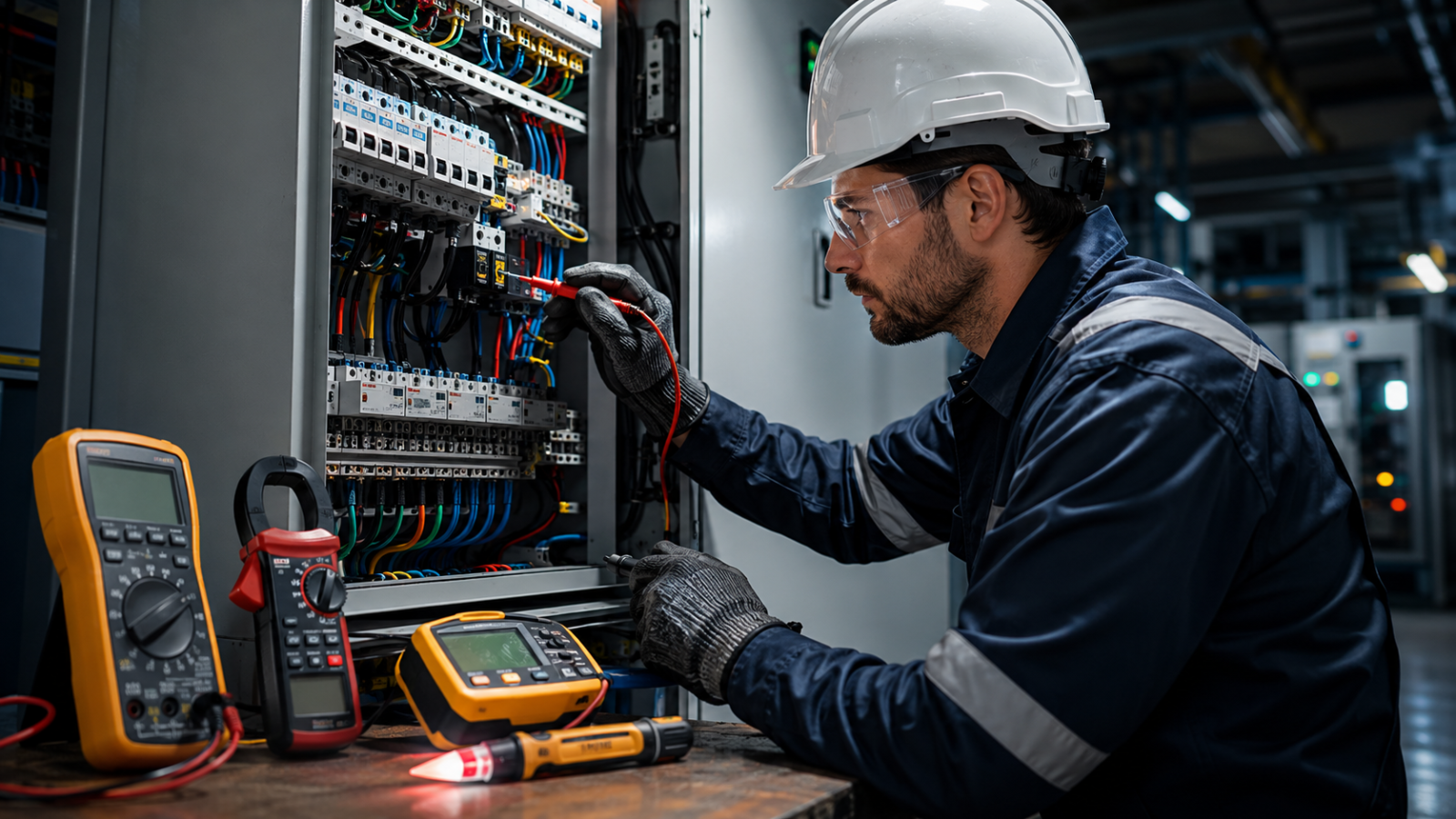
Safe and effective electrical fault finding is a task that electricians, maintenance engineers, and (in many cases) DIY enthusiasts need to carry out to the very highest standards. The right electrical inspection equipment will be integral in ensuring this.
This article will put the spotlight on the instruments that are most critical to the fault-finding and diagnostic efforts of today’s electricians and maintenance personnel.
6 Instruments That Help Professionals Identify and Diagnose Issues
Here are examples of widely available tools and devices that both professionals and amateurs can count on to help them identify the root cause of various problems:
- Digital Multimeters
Also often referred to as simply “DMMs”, these are often the first tool that a professional reaches for when troubleshooting.
A multimeter is no less than one of the most versatile and commonly used tools for such purposes. It can measure voltage, current, resistance, and continuity.
Key features to look out for on DMMs include True Root Mean Square (True RMS) capability for ensuring the accuracy of readings, a high CAT rating for safety on mains circuits, and a clear backlit display.
- Multifunction Installation Testers
Great numbers of electricians regard a multifunction installation tester, or MFT, as the cornerstone of their toolkit.
Combining several specialised diagnostic tools into a single device, an MFT can be invaluable for verifying wiring safety, locating hidden insulation breakdowns, and pinpointing grounding failures.
- Clamp Meters
Also known as “current clamps”, clamp meters are distinctive because of the ability they give professionals to measure live current inductively through a conductor, without breakage of the circuit being necessary.
By clamping around a single wire, the user of the clamp meter can read the magnetic field that the current generates. This enables them to diagnose such issues as overloads, load imbalances, and earth leakage.
- Insulation Resistance Testers
An insulation resistance tester, also often called a “Megger” or “megohmmeter”, helps identify deterioration in cable insulation before it leads to faults or safety hazards.
The device accomplishes this through the application of a high DC voltage to an isolated circuit. This process helps draw attention to insulation degradation, hidden weaknesses, and short circuits.
- Voltage Testers
To safely confirm whether a given circuit is live, pick out where electrical current stops flowing, and identify structural wiring problems, an inspector is likely to turn to a voltage tester.
These are essential safety tools to use prior to commencing electrical work. They effectively act as the technician’s eyes inside an otherwise invisible electrical system.
- Continuity Testers
When it comes to verifying the completeness of an electrical path, a continuity tester can be immensely useful for many a technician.
Many multimeters incorporate continuity functions. However, dedicated continuity testers can allow for rapid checks in specific applications. They can be indispensable for testing switches and relays, and for identifying broken conductors.
You Won’t Regret Investing in Quality Tools from Reputable Brands
If you’re reading this as an electrician, maintenance worker, enthusiastic amateur, or even an organisational decision-maker, this rundown of essential instruments for electrical fault finding and diagnosis will have hopefully been insightful for you.
When you equip yourself with the right instruments from trusted and proven suppliers, you can be sure that this will greatly help you shorten troubleshooting time, improve safety, and maintain compliance with industry standards.