
Introduction
A museum or cultural center gift shop is not just a retail corner near the exit. It is often the final part of the visitor experience. After people have spent time with exhibitions, history, art, science, or cultural stories, the gift shop gives them a chance to take part of that experience home.
When planned thoughtfully, a gift shop can support education, generate revenue, promote local makers, and strengthen the identity of the institution. But when it feels generic or disconnected from the exhibition, visitors may walk through quickly without interest.
Connect Products to the Visitor Experience
The strongest museum gift shops feel connected to what visitors just saw. Products should not look like random souvenirs. They should reflect the themes, colors, stories, or materials of the exhibitions.
For example, a natural history museum might offer field notebooks, educational kits, animal illustrations, or nature-inspired accessories. A cultural center might feature local crafts, books, textiles, or items made by regional artists. A science museum might sell hands-on experiment kits or design-led educational products.
When products connect to the visit, customers feel they are buying a memory, not just an object.
Offer Practical Items People Will Use
Gift shop purchases should feel meaningful, but they should also be useful. Visitors are more likely to buy items they can use in daily life: notebooks, reusable bags, stationery, scarves, small home goods, or educational materials.
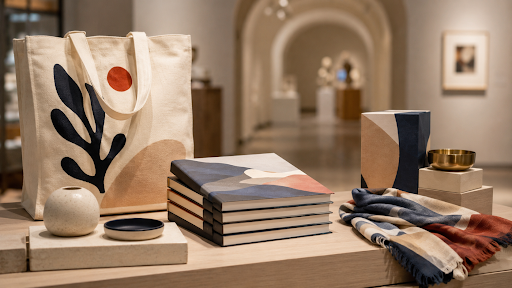
Some museums use Custom Tote Bags as practical souvenir items because they can feature exhibition artwork, institution branding, or artist illustrations while remaining useful after the visit.
A well-designed reusable item can continue reminding the visitor of the museum long after they leave.
Think Carefully About Material Quality
A gift shop product reflects the institution. If the quality feels poor, it can weaken the overall impression of the visit. This is especially important for fabric items, books, stationery, and packaging.
When selecting reusable bags, museums and cultural centers should consider fabric weight, structure, print results, and long-term durability. A resource such as a Canvas Bag Weight Guide can help buyers understand how material thickness affects feel, strength, and perceived value.
Visitors may not know technical fabric details, but they can immediately feel whether an item seems worth keeping.
Support Local Artists and Makers
Gift shops can become platforms for local creativity. Featuring regional artists, independent publishers, ceramicists, textile makers, or illustrators helps the shop feel more authentic. It also reinforces the museum’s connection to its community.
A rotating selection can keep the shop fresh and encourage repeat visits. Visitors who know the shop changes seasonally may return even when they are not attending a major exhibition.
Make the Shop Easy to Browse
A good gift shop should feel inviting, not crowded. Products should be grouped clearly by theme, price, or audience. Children’s items, books, exhibition products, local maker goods, and practical accessories should be easy to find.
Clear pricing and thoughtful displays reduce hesitation. Visitors often make quick decisions at the end of a visit, so the shopping experience should feel calm and well organized.
Conclusion
Museums and cultural centers can improve their gift shops by treating them as an extension of the visitor experience. Products should connect to exhibitions, feel useful, reflect quality, and support the cultural identity of the institution.
A thoughtful gift shop does more than sell souvenirs. It helps visitors carry a meaningful part of the experience into everyday life.