
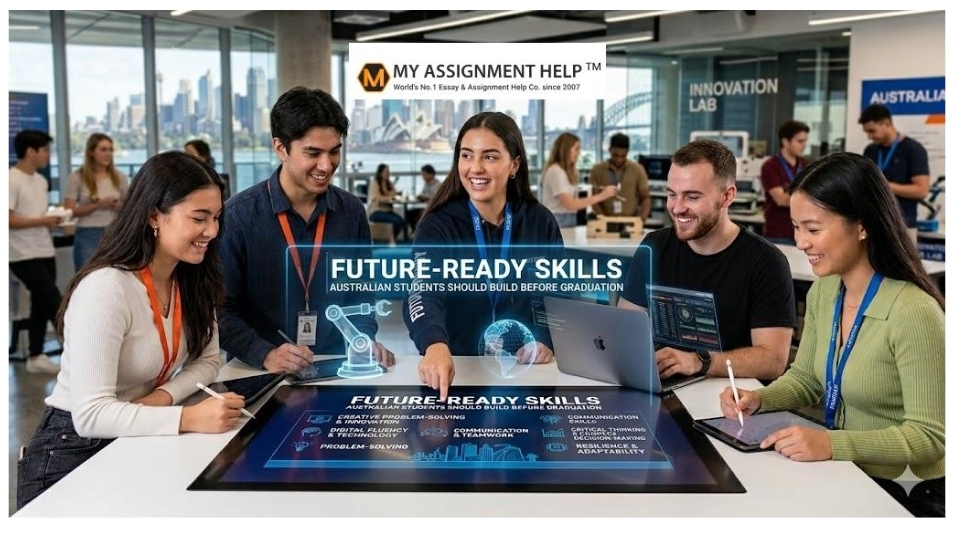
The Australian professional landscape is undergoing a profound structural transformation. Rapid technological evolution, changing economic realities, and intense global integration mean that the workforce high school, vocational, and university students enter tomorrow will look vastly different from the one that exists today. According to recent reports by national research bodies like Jobs and Skills Australia and the National Skills Commission, a significant percentage of future jobs will require advanced digital literacy, critical thinking, and cognitive adaptability.
For young Australians standing on the precipice of graduation, preparing for this shift is no longer optional—it is an absolute necessity. Securing a senior high school certificate, an undergraduate degree, or a postgraduate qualification remains a fantastic milestone, but academic qualifications alone are no longer a guaranteed golden ticket to long-term career longevity. Employers across every major industry are increasingly pivoting toward skills-based hiring, actively seeking “future-ready” individuals who possess a dynamic, integrated blend of technical competencies and deep interpersonal capabilities.
Whether you are finishing Year 12 in Sydney, completing a complex undergraduate degree in Melbourne, or pursuing specialized post-graduate studies in Brisbane, navigating this transition requires a proactive blueprint. To cultivate true employability within a highly competitive market, there are specific, essential future-ready skills you must intentionally build before graduation to thrive in the modern Australian economy.
1. Advanced Digital Literacy and Fluency for Australian Graduates
We have long passed the era where “digital literacy” simply meant knowing how to draft a Word document, format an email, or navigate a basic Excel spreadsheet. In 2026 and beyond, artificial intelligence (AI), machine learning, cloud architecture, and big data are actively redefining every corner of the domestic market, from healthcare and financial services to the creative arts and modern agriculture.
As an Australian graduate entering a tech-driven marketplace, you need to develop comprehensive AI fluency. This does not imply that every student needs to become a software engineer or a backend data scientist. Rather, it means you must master the art of collaborating with emerging technology to amplify your own output. This domain is broken down into three critical technical facets:
- Prompt Engineering and AI Tool Mastery: Learning how to effectively prompt advanced AI models and research co-pilots like ChatGPT or Claude to optimize daily business workflows is quickly becoming as foundational as touch-typing. High-value candidates are those who can use these systems safely to automate administrative burdens, freeing up mental bandwidth for high-level creative execution.
- Data Literacy and Interpretation: Data is the new currency of corporate Australia. Modern employers highly prize the ability to read, analyse, and interpret complex data streams to make evidence-based decisions, regardless of whether you work in marketing, human resources, or logistics. Navigating these highly analytical datasets can be challenging; for instance, students breaking down complex molecular data sets often seek specialized biochemistry assignment help to master the quantitative analysis required in modern laboratory roles.
- Cybersecurity Awareness and Digital Hygiene: With major, highly publicized data breaches frequently making headlines across Australia, understanding the fundamentals of data privacy, regulatory compliance, and basic digital hygiene is an invaluable asset for any modern enterprise.
2. Critical Thinking and Complex Problem-Solving in the Local Market
As automation and artificial intelligence systematically absorb routine, predictable, and repetitive administrative tasks, the human workforce will be relied upon heavily for tasks that require deep cognitive processing. Critical thinking—defined as the capacity to objectively analyse information, ruthlessly question foundational assumptions, and synthesise complex data points—is a uniquely human skill that algorithms cannot easily replicate.
In the contemporary Australian workforce, organizational challenges are rarely linear or predictable. Whether you find yourself managing an intricate environmental sustainability project in Western Australia or optimizing a fragmented supply chain network across New South Wales, you will inevitably encounter multifaceted problems with no clear precedent. Students analyzing these spatial dynamics and regional ecosystems frequently utilize geography homework help to better understand how localized data influences macro-level environmental planning.
- Moving Beyond Rote Memorisation: Actively shifting your learning habits away from static memorisation and focusing intensely on the structural why and how behind complex systems.
- Active Source Evaluation: Practising continuous, objective evaluation of informational sources to decisively separate digital misinformation from verifiable facts.
- Lateral Thinking Frameworks: Engaging in alternative cognitive strategies to uncover innovative, unconventional solutions when standard corporate frameworks fall short.
If you occasionally struggle with structuring highly analytical essays or untangling the complex case studies designed to build these exact cognitive frameworks during your higher education journey, seeking targeted, expert guidance can be a major advantage. Utilizing Myassignment.services can provide the essential structural support and conceptual clarity needed to sharpen your critical thinking and assignment execution under pressure.
3. Emotional Intelligence (EQ) and Interpersonal Skills for Diverse Teams
While your technical hard skills might successfully get your resume past an automated Applicant Tracking System (ATS), your soft skills are what ultimately land you the job during an interview and enable you to climb the corporate ladder. Emotional Intelligence (EQ) is the nuanced ability to understand, manage, and leverage your own emotions while empathetically navigating the emotional states of those around you.
In high-pressure corporate environments, a highly developed EQ manifests through several distinct, actionable behaviours:
- Active Listening: Truly hearing and understanding what colleagues, clients, or cross-functional stakeholders are communicating without immediately formulating a defensive rebuttal or interjecting with your own agenda.
- Constructive Conflict Resolution: Navigating inevitable workplace disagreements maturely, objectively, and empathetically, focusing entirely on collaborative solutions rather than personal friction.
- Empathy and Radical Inclusivity: Working cohesively within Australia’s beautifully diverse, multicultural workforce, ensuring that every team member feels valued and heard.
A high baseline of EQ builds psychological safety within corporate teams. This psychological safety serves as the primary engine driving organic collaboration, reducing employee burnout, and accelerating collective productivity.
4. Adaptability, Cognitive Flexibility, and Lifelong Upskilling
The historical economic concept of a “job for life” is officially obsolete. The modern professional trajectory is fundamentally non-linear; individuals frequently pivot between distinct industries, corporate roles, and operational models throughout their working lives. Consequently, personal adaptability has become the ultimate career survival skill.
Cognitive flexibility allows an individual to quickly unlearn outdated operational practices and rapidly relearn entirely new methodologies. When a disruptive software ecosystem, a new corporate strategy, or a sweeping macroeconomic policy is introduced, a future-ready graduate does not resist the friction of change; they lean into it as a competitive opportunity.
To effectively cultivate this resilience, students must build an enduring habit of lifelong learning. Do not view your formal graduation ceremony as the final destination of your education, but rather as the official commencement of a self-directed learning journey. Continually protect your career from disruption by pursuing micro-credentials, targeted short courses, and industry-recognized certifications.
5. Cross-Cultural Competency and an Asia-Pacific Global Mindset
Australia stands proudly as one of the most culturally diverse nations on earth, positioned both geographically and economically within the highly dynamic Asia-Pacific region. Consequently, modern Australian businesses inevitably operate on an international stage, managing cross-border supply chains and global client portfolios.
Graduates entering this market must possess robust cross-cultural competency—the practical ability to communicate, collaborate, and build authentic professional relationships across cultural boundaries. This involves:
- Adapting Communication Styles: Recognizing, respecting, and seamlessly adapting to diverse global communication nuances and corporate etiquette.
- Mitigating Implicit Biases: Developing self-awareness to identify implicit cultural biases and actively working to mitigate their influence in collaborative environments.
- Understanding Global Market Dynamics: Appreciating how macroeconomic shifts, international trade agreements, and localized cultural movements resonate across global markets.
Participating in university exchange programs, volunteering with diverse community organizations, or diving deep into international business case studies can immensely broaden your perspective before you enter the corporate arena.
6. Financial Literacy and Commercial Acumen in Corporate Operations
No matter what field you ultimately enter—be it nursing, civil engineering, fine arts, or corporate law—you will inevitably operate within a distinct economic framework. Understanding exactly how businesses generate revenue, manage operational expenditures, and navigate losses is known as commercial acumen, and it remains shockingly rare among fresh graduates.
Young entering professionals should strive to demystify basic economic operations by focusing on three key metrics:
- Organizational Value Creation: Understanding exactly how your specific daily role contributes directly to the company’s bottom line, fiscal health, or broader organizational mission.
- Budgetary Literacy: Mastering the foundational concepts of profit margins, revenue generation, operational costs, and return on investment (ROI).
- The Broader Economic Landscape: Keeping a consistent pulse on domestic inflation rates, monetary policy shifts by the Reserve Bank of Australia (RBA), and broader market trends through reputable publications like the Australian Financial Review.
On a personal level, robust financial literacy acts as a shield, protecting you from early-career debt while teaching you how to strategically manage, save, and invest your income.
7. Effective Communication and Personal Branding in 2026
You could easily possess the most groundbreaking, innovative idea in the world, but if you cannot articulate it clearly, concisely, and persuasively to a stakeholder, client, or senior manager, that idea dies in isolation. Strong written and oral communication remains an evergreen, non-negotiable skill set. Furthermore, in 2026 and beyond, your professional identity is no longer limited to a flat, two-dimensional paper resume. It lives dynamically online.
- Written Precision: The capacity to author concise emails, compelling executive summaries, and thorough professional proposals completely free of redundant corporate jargon.
- Confident Public Speaking: Articulating your thoughts confidently and structurally during team meetings, client pitches, or digital webinars.
- Digital Personal Branding: Actively optimizing your LinkedIn profile to highlight your skills, networking meaningfully with industry leaders, and consistently positioning yourself as an engaged, knowledgeable professional within your niche.
8. Environmental, Social and Governance (ESG) Sustainability Consciousness
The Australian government, alongside the broader international community, has committed to stringent net-zero carbon targets and comprehensive sustainable development goals. As a direct result, green skills and sustainability literacy are no longer exclusive domains for environmental scientists or niche consultants.
“Green literacy” is rapidly permeating every layer of corporate Australia. Future-ready graduates across all disciplines must understand the core principles of Environmental, Social, and Governance (ESG) frameworks. This includes comprehending the mechanics of the circular economy—where business processes are intentionally designed to eliminate waste and maximize resource longevity. Employers are actively searching for forward-thinking candidates who can help their organizations transition smoothly into sustainable, ethical, and legally compliant operational models.
How Australian Students Can Build These Skills Before Graduation
Knowing which skills are required is only half the strategic battle; understanding exactly how to acquire them during your final years of study is where true professional differentiation happens.
Seek Work-Integrated Learning (WIL) and Internships
Do not wait until after your graduation ceremony to begin exploring industry dynamics. Actively pursue structured internships, professional clerkships, and work-integrated learning (WIL) modules offered directly through your academic institution. This crucial exposure places you face-to-face with real-world workplace systems, allowing you to practice soft skills and expand your professional network before entering the job market full-time.
Embrace the “T-Shaped” Skill Model
As illustrated in modern workforce development frameworks, you should actively strive to become a “T-shaped” professional. The vertical bar of the “T” represents your deep disciplinary knowledge—your specific university major, technical degree, or trade qualification.
Conversely, the horizontal bar of the “T” represents your broad, cross-disciplinary skills, such as AI fluency, emotional intelligence, and critical thinking. This powerful combination ensures that you are both highly specialized in your core field and highly adaptable to broader organizational changes.
Balance Academic Pressures with Practical Upskilling
Many students become so completely overwhelmed by the sheer volume of impending assignment deadlines, demanding research papers, and stressful examinations that they find it impossible to carve out time for practical skill building. Learning how to manage your time and strategically delegate support when your academic workload peaks is a highly beneficial skill in itself.
Using trusted, high-quality educational consulting Myassignment.services can help you navigate heavy university workloads, essays and technical projects efficiently. By receiving expert, structured guidance on your coursework, you can maintain excellent grades while freeing up the valuable time required to pursue internships, secure micro-credentials, and build a standout personal brand.
Frequently Asked Questions
Q.1 What are the most in-demand skills in Australia right now?
According to employment data from Jobs and Skills Australia, the most critical skills gaps span across data analysis, AI application, and green literacy (sustainability management). Alongside these technical competencies, soft skills like emotional intelligence, adaptive problem-solving, and cross-cultural competency are highly sought after by recruiters across all sectors.
Q.2 How can high school and TAFE students show future-ready skills on a resume?
Students can effectively highlight these capabilities by steering away from generic descriptions and focusing on concrete actions. For example, instead of listing “good communicator,” detail a project where you managed a team budget, automated a repetitive manual process using an AI tool, or presented research findings to a public audience. Use quantifiable achievements from part-time work, internships, or extra-curricular clubs.
Q.3 Why are traditional degrees no longer enough to guarantee a career in Australia?
While formal qualifications establish an essential baseline of technical or theoretical knowledge, the rapid evolution of technology means that hard skills risk becoming obsolete faster than ever before. Modern employers prioritize operational adaptability and interpersonal agility. They seek professionals who can quickly integrate new technologies, communicate across diverse international contexts, and collaborate effectively within dynamic teams.
Conclusion
The transition from student life to professional employment is an incredibly exciting yet challenging journey. As the contemporary Australian job market continues to evolve under the relentless influence of artificial intelligence, shifting macroeconomic landscapes, and global integration, the traditional definition of a qualified graduate has expanded significantly.
By consciously developing digital literacy, emotional intelligence, critical thinking, and financial acumen before you cross the graduation stage, you effectively insulate your future career against market volatility. Remember to utilize the tools and support systems around you, manage your academic load strategically, and commit unconditionally to a mindset of continuous personal growth.
About the Author – Drake Miller
I am a seasoned academic content writer at Myassignment.services, dedicated to creating informative and student-centric content for learners across different academic levels. My expertise includes assignment assistance, academic planning, research methodologies, and strategies to enhance study performance. By delivering clear insights and practical guidance, I strive to support students in achieving stronger academic results, staying organized, and navigating educational challenges with greater confidence and efficiency throughout their academic journey.