
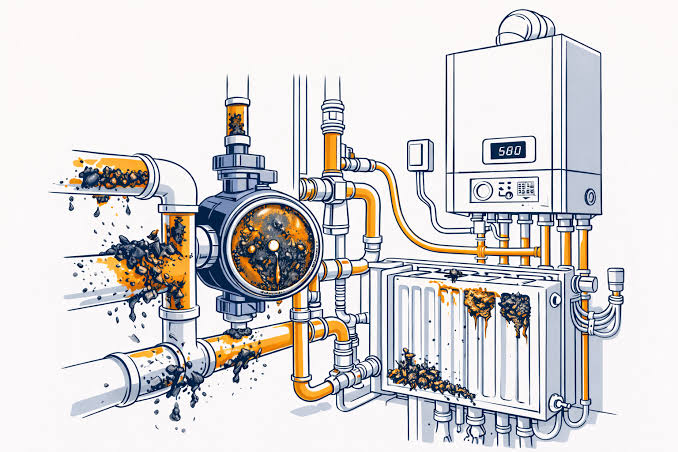
Heat only reaches your radiators if water is actually moving through the system properly, and when circulation slows down or stops, efficiency drops fast even if the boiler itself is working fine. Vaillant boilers flag this specifically with the Vaillant F24 fault code, locking out once it detects water isn’t circulating as it should. Understanding why circulation fails helps explain a huge share of the heating problems homeowners run into, well beyond just this one fault code.
This guide covers how circulation actually affects efficiency, the most common causes of poor flow, and what to check before calling a professional.
Circulation problems reduce central heating efficiency by preventing hot water from reaching radiators evenly, forcing the boiler to work harder while producing less usable heat. Common causes include a faulty pump, trapped air, sludge build-up, and closed isolation valves. Left unresolved, poor circulation can also trigger safety lockouts, such as the Vaillant F24 code, to prevent overheating damage.
Why Circulation Matters More Than People Realise
A boiler’s efficiency depends entirely on water actually reaching every radiator at the right temperature and flow rate.
When circulation is compromised, water sits in the heat exchanger longer than it should, causing localised overheating even while other parts of the system stay cold. This mismatch is exactly what boiler overheating protection systems are designed to catch, since running with poor flow risks real damage to internal components over time.
Circulation Pump Faults: The Most Common Culprit
The circulation pump is the component physically responsible for moving water around the system, and when it fails, everything downstream suffers.
Circulation pump faults typically stem from worn bearings, seized components, or debris causing a blockage within the pump housing itself. An overheating pump, making unusual grinding or humming noises, or vibrating excessively is often showing early signs of failure well before it stops working entirely.
Heating Pump Airlocks: A Simpler but Common Cause
Not every circulation issue involves a genuinely broken component. Trapped air is one of the more frequent, and more easily resolved, causes.
Heating pump airlocks occur when air becomes trapped within the pump or nearby pipework, physically blocking water from flowing smoothly. This often happens after maintenance work, a power flush, or simply over time as small amounts of air accumulate. Bleeding radiators and towel rails typically clears this, restoring normal circulation without needing any parts replaced.
Flow Temperature Imbalance: What It Signals
Boilers continuously monitor the temperature difference between water leaving the system and water returning to be reheated, and this comparison reveals a lot about circulation health.
Flow temperature imbalance occurs when this gap becomes too large, indicating water isn’t moving through the system at the expected rate. A healthy system shows a consistent, moderate difference between flow and return temperatures. A widening gap points directly toward reduced circulation, whether from a pump issue, an airlock, or a blockage restricting flow.
Common Causes of Circulation Problems
Several distinct issues can restrict flow, and identifying the right one helps target the fix accurately.
- A faulty or seized circulation pump
- Trapped air within the pump, radiators, or pipework
- Sludge and debris build-up restricting flow through the heat exchanger
- Closed isolation valves, often left shut after servicing
- Incorrect pump speed settings, particularly in larger properties
Pump Impeller Issues: A Closer Look Inside the Pump
The impeller is the rotating component inside the pump that actually pushes water through the system, and problems here directly affect circulation.
Pump impeller issues typically develop from debris entering the pump housing, gradual wear over years of use, or limescale build-up in hard water areas restricting free movement. A seized impeller effectively stops the pump from doing its job entirely, even if the motor itself still receives power, which is why a pump can sometimes run without actually circulating any water.
Comparing Circulation Problem Causes
Understanding the difference between DIY-fixable and professional-only causes helps set the right expectations.
| Cause | Typical Sign | DIY Fixable |
| Trapped air | Gurgling noises, cold radiator tops | Yes, bleed radiators |
| Closed isolation valves | No flow at all after servicing | Yes, check valve position |
| Sludge or debris | Uneven heating, cold spots | No, needs a power flush |
| Faulty pump | Humming, overheating, no circulation | No, needs an engineer |
| Impeller wear or seizure | Pump running but no water movement | No, needs an engineer |
What Homeowners Can Safely Check First
Before assuming the worst, a few simple checks resolve a meaningful share of circulation problems.
Reset the boiler once to see if the fault clears, check that isolation valves beneath the boiler are fully open, bleed radiators and towel rails to release any trapped air, and confirm system pressure sits between 1.0 and 1.5 bar. If these checks don’t resolve the issue, the cause likely involves the pump itself or debris within the system, both of which need professional attention.
Boiler Overheating Protection: Why the System Locks Out
Rather than continuing to run with restricted flow, boilers are specifically designed to shut down once poor circulation is detected.
Boiler overheating protection exists because water sitting too long in the heat exchanger without adequate flow can reach damaging temperatures, even while the rest of the system stays cool. This lockout, reflected in codes like F24, protects expensive internal components from the kind of damage that circulation problems can otherwise cause over time.
Frequently Asked Questions
What does the Vaillant F24 fault code mean?
It indicates the boiler has detected poor water circulation, often caused by a pump fault, trapped air, closed valves, or blockages within the system.
Can I fix circulation problems myself?
Some causes, like closed valves or trapped air, are safe to check and fix yourself. Pump faults and impeller issues need a Gas Safe engineer.
How do I know if my pump is failing?
Unusual noises, excessive heat, vibration, or a complete lack of water movement despite the pump running are common signs of pump failure.
Does sludge really affect circulation that much?
Yes. Sludge build-up restricts flow through the heat exchanger and pipework, and is one of the most common underlying causes of gradual circulation decline.
Why does my boiler overheat even though some radiators stay cold?
This pattern often points to circulation problems, where water isn’t flowing evenly, causing localised overheating in the heat exchanger while other areas stay cool.
How often should I get my heating system checked for circulation issues?
An annual service catches early pump wear, sludge build-up, and other developing circulation problems before they trigger a lockout.
Keeping Circulation Running Smoothly
Efficient heating depends on water reaching every radiator properly, and understanding the common causes of poor circulation helps you respond appropriately rather than guessing. Simple checks resolve some issues immediately, while pump and impeller faults always need professional diagnosis.
0800 Homefix provides Gas Safe registered heating repairs across London and the South East, including specialist diagnosis of circulation faults such as Vaillant F24, backed by a 24/7 emergency response and no call-out fee.