
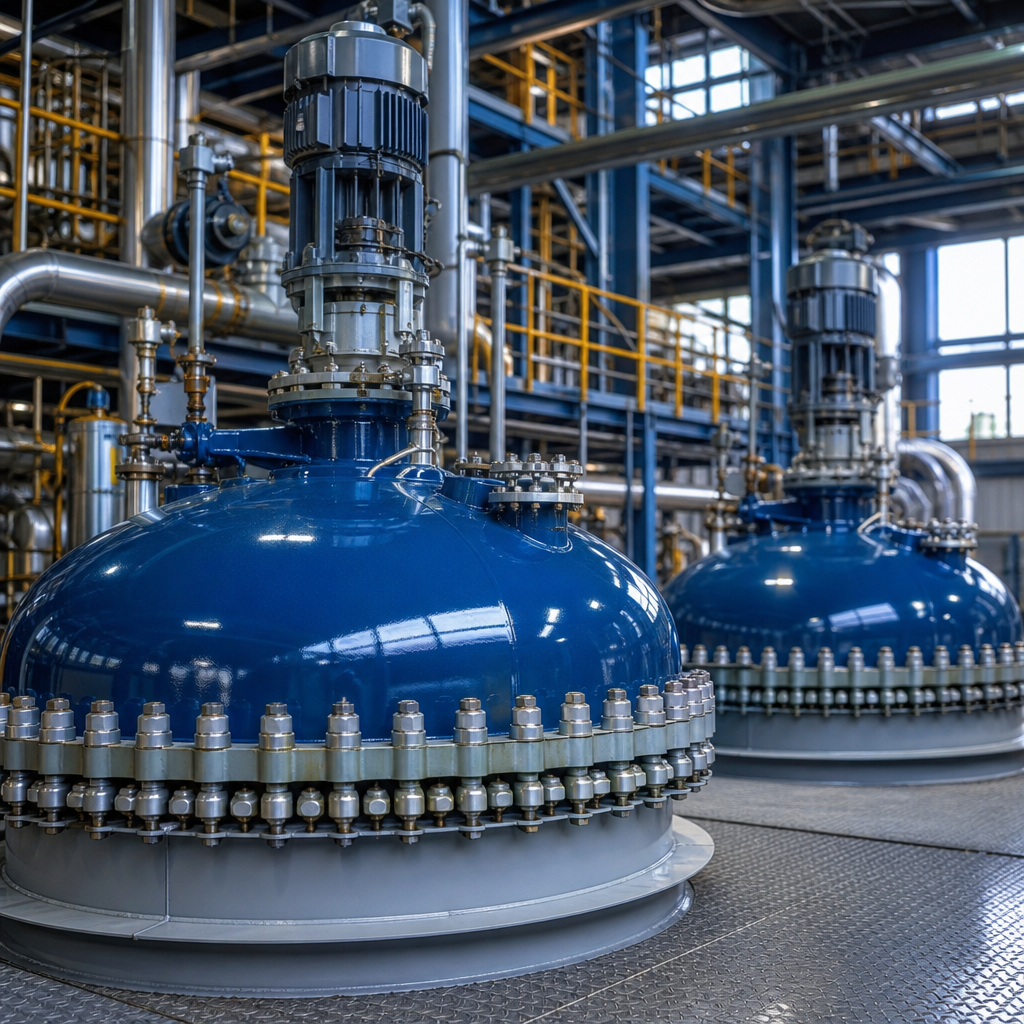
In the world of chemical processing, pharmaceutical manufacturing, and specialty industrial production, the materials used to construct process equipment are never a trivial decision. Corrosion resistance, thermal stability, product purity, and long-term operational reliability all hinge on the quality of the vessel at the heart of the process. Among the many options available to engineers and procurement specialists, one solution has consistently proven its worth across decades of demanding industrial use. Understanding why this technology continues to lead the market requires a closer look at both the science behind it and the operational realities that plant managers face every day.
The Science Behind Glass Lining Technology
Glass lining is not simply a coating applied to the inside of a steel vessel. It is a fusion process in which a specially formulated borosilicate glass is fired onto a steel substrate at temperatures exceeding 800 degrees Celsius. The result is a chemically inert, smooth, and non-porous surface that bonds permanently to the base metal. This dual-material construction gives the vessel the mechanical strength of steel combined with the chemical resistance of glass — a combination that neither material could achieve independently.
The glass layer resists attack from a wide range of acids, solvents, and reactive compounds that would rapidly degrade stainless steel or other alloy alternatives. This makes glass lined equipment particularly valuable in pharmaceutical synthesis, agrochemical production, and fine chemical manufacturing, where product contamination is not merely a quality concern but a regulatory and safety imperative. The smooth interior surface also prevents product adhesion and simplifies cleaning, which is critical in multi-product facilities where cross-contamination between batches must be eliminated.
Batch Processing and the Role of Reactor Design
Batch reactors represent one of the most common configurations in chemical and pharmaceutical manufacturing. Unlike continuous flow systems, batch reactors allow precise control over reaction conditions — temperature, pressure, mixing intensity, and reaction time — for each individual production run. This flexibility is essential when producing high-value compounds in relatively small quantities, or when the production schedule demands frequent changeovers between different products.
The design of the reactor body itself plays a significant role in determining process outcomes. A well-engineered batch reactor body must accommodate heating and cooling jackets, agitator assemblies, nozzle configurations for charging and discharging materials, and instrumentation ports — all while maintaining the integrity of the glass lining across every surface. Poor design or substandard manufacturing can lead to chipping, cracking, or delamination of the glass layer, which not only compromises product quality but can result in costly downtime and vessel replacement.
Thermal Management in Glass Lined Batch Reactors
One of the more technically demanding aspects of operating glass lined batch reactors is thermal management. Glass and steel expand at different rates when subjected to temperature changes, and this differential thermal expansion must be carefully managed to prevent stress fractures in the lining. Reputable manufacturers account for this through precise control of the glass composition, the firing process, and the geometry of the vessel itself. Operators must also follow established protocols for heating and cooling rates to avoid thermal shock, which remains one of the primary causes of glass lining damage in the field.
Selecting the Right Vessel for Your Process
Choosing the correct glass lined vessel for a specific application involves evaluating several interdependent factors. Vessel capacity, operating pressure and temperature ranges, the chemical nature of the process media, agitation requirements, and nozzle placement all influence the final specification. Procurement teams working with experienced suppliers can navigate these variables more efficiently, particularly when the supplier maintains a ready inventory of standard configurations that can be adapted or deployed quickly.
A glass lined vessel sourced from a reputable supplier with a verified track record in process equipment offers more than just a piece of hardware — it represents a documented history of performance, available inspection records, and often a significantly shorter lead time compared to new fabrication. For plants managing tight production schedules or replacing failed equipment under operational pressure, this availability can be the difference between days of downtime and weeks.
Integration with Broader Process Systems
Glass lined reactors do not operate in isolation. They are integrated components within larger process systems that may include heat exchangers, condensers, storage tanks, filtration units, and water treatment infrastructure. The reliability of the entire system depends on the compatibility and quality of each individual component. As facilities modernize and expand, the ability to integrate new or refurbished equipment into existing process trains becomes a key engineering consideration.
Water treatment, for example, is a critical support function in many chemical and pharmaceutical plants. Containerized water treatment systems have emerged as a practical solution for facilities that require reliable, scalable water purification without the complexity and cost of permanent infrastructure. These modular systems can be deployed rapidly and integrated into existing utility networks, supporting the broader operational goals of the plant.
Instrumentation and Process Control Considerations
Accurate measurement and control are essential in any batch process. Level measurement within glass lined vessels presents unique challenges because the smooth, non-conductive glass surface limits the use of certain sensor technologies. Capacitance-based and radar-based level instruments are commonly employed, and their calibration must account for the dielectric properties of both the glass lining and the process fluid. For facilities operating boilers or steam generation equipment in support of their reactor systems, advanced control strategies for boiler drum level management are equally important to ensure stable steam supply and prevent equipment damage from level excursions.
International Process Plants: A Trusted Source for Refurbished Process Equipment
International Process Plants has established itself as a leading global supplier of used and refurbished process equipment, with an extensive inventory spanning reactors, heat exchangers, distillation columns, and complete process systems. Their expertise in glass lined equipment is particularly well regarded within the pharmaceutical and chemical industries, where equipment provenance, inspection documentation, and lining condition assessments are non-negotiable requirements. The company’s ability to source, inspect, and certify equipment from decommissioned facilities around the world gives buyers access to high-quality assets at a fraction of new fabrication costs.
For engineering teams tasked with expanding capacity or replacing aging equipment on constrained budgets, working with a supplier of this caliber provides both technical assurance and commercial flexibility. Their inventory is regularly updated, and their technical staff can assist with specification matching, lining condition evaluation, and logistics coordination across international markets.
Conclusion
Glass lined vessels have earned their place at the center of chemical and pharmaceutical manufacturing through decades of proven performance in demanding environments. Their unique combination of mechanical strength and chemical inertness addresses challenges that no single alternative material can match as effectively. As the industry continues to evolve — with increasing regulatory scrutiny, tighter production timelines, and growing pressure to optimize capital expenditure — the strategic sourcing of quality glass lined equipment from experienced suppliers will remain a critical competency for plant engineers and procurement professionals alike. Investing in the right vessel, from the right source, is an investment in the reliability and integrity of the entire process.