
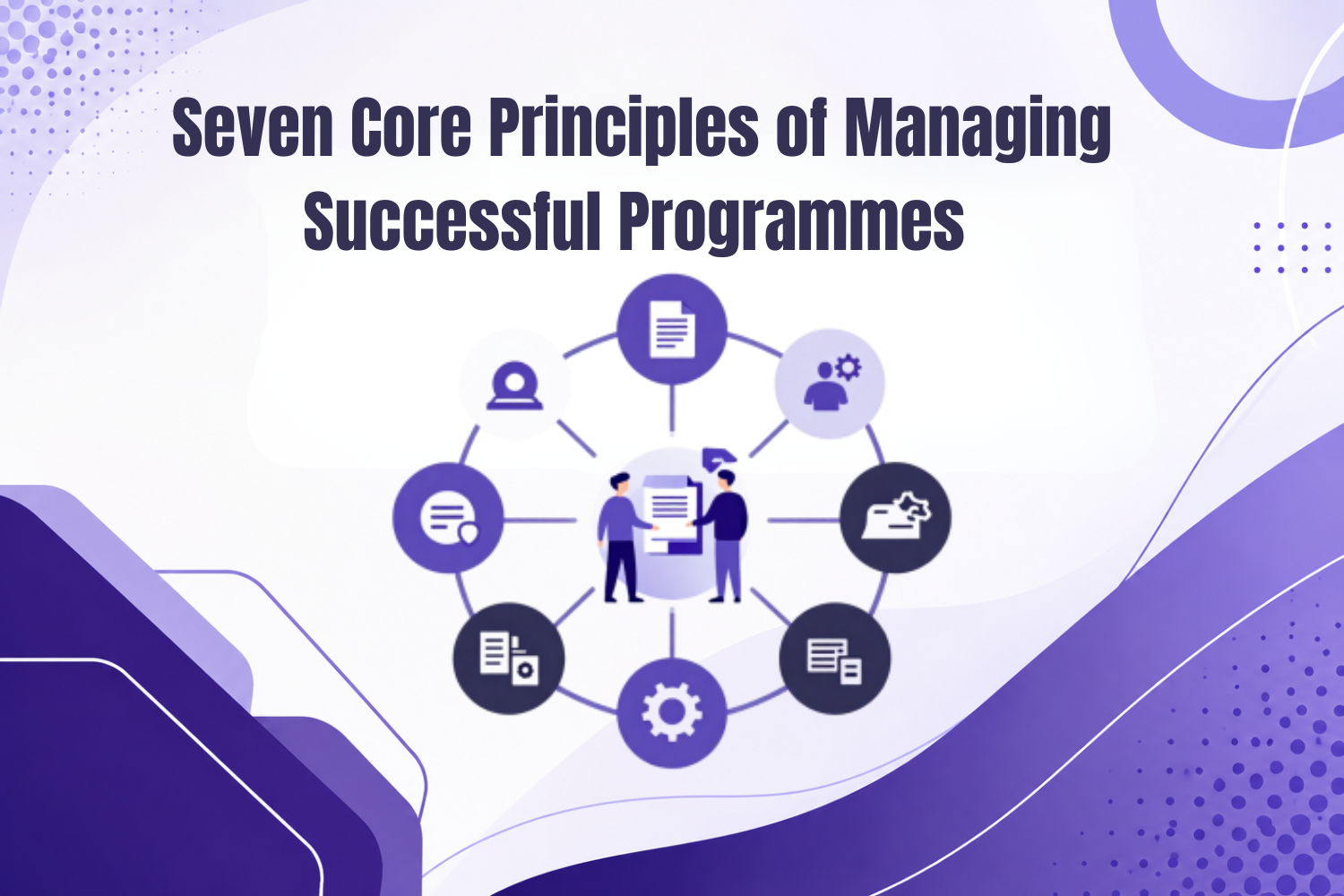
What makes a programme successful when several teams, goals, and projects must move together? An MSP Course can help professionals understand how to manage such programmes with greater clarity. It introduces practical principles for keeping people focused, handling change, and delivering useful results.
But what really keeps a programme on track when priorities shift? The answer lies in seven core principles that guide effective programme leadership. In this blog, we will explore these principles and see how they can support better decisions, stronger teamwork, and valuable outcomes in modern organisations.
1. Remaining Aligned with Corporate Strategy
A programme should have a clear connection with what the organisation wants to achieve.
Think about a company that wants to improve customer service. It may start projects to update its website, improve support, and organise customer information. Each project may look useful on its own. But the real value comes when they all support the same business goal.
The focus is that programme leaders should regularly check whether the work still supports the organisation’s direction.
Business needs can change. What seemed important six months ago may not matter as much today. A programme should be able to respond to these changes.
For anyone working in programme management, this helps keep time, money, and effort focused on the right things.
2. Learning From Experience
Every programme provides opportunities to learn and improve. Every programme can teach a team something useful.
Perhaps a project took longer than expected. Maybe a new process worked better than planned. Perhaps a team found a simple way to solve a difficult problem.
The important thing is to learn from these experiences.
Teams can review what worked, what did not and how those lessons can improve future decisions.
Learning should not happen only when a programme ends. It can happen throughout the work.
An MSP Course can help professionals understand how using lessons from previous work can lead to better choices and fewer repeated mistakes.
3. Designing and Delivering a Coherent Capability
A programme should bring its different projects together to create one useful result.
Imagine a company wants to improve its online shopping service. Building a new website may help, but it may not be enough. Employees may need training. Customer support may need updating. Internal processes may also need improvement.
Programme leaders need to consider the complete picture and ensure that individual projects contribute to the required capability.
The resulting capabilities should work together to support the intended programme outcomes. Customers and employees should see one useful improvement rather than several unrelated changes.
That is a key part of Managing Successful Programmes.
4. Adding Value
Every programme uses resources, so it should provide something worthwhile in return.
Value can mean better customer service, lower costs, faster work, improved employee experience, or stronger business performance.
However, not every activity automatically creates value.
Imagine a company buys an expensive new system because it has impressive features. If employees find it difficult to use and customers notice no improvement, the investment may not be worthwhile.
Programme leaders should keep asking whether their work is producing useful results.
Keeping value at the centre of programme decisions helps teams avoid unnecessary work. It encourages teams to question unnecessary work and put their energy where it can make a real difference.
5. Focusing on Benefits and Threats
Every programme has something it wants to achieve. It also has things that could prevent those results.
Benefits are the positive changes the organisation expects. Threats are potential issues or uncertainties that could negatively affect expected benefits.
For example, a business may introduce remote working technology. Greater flexibility could be a benefit. Poor security or limited employee training could become threats.
Looking at both sides helps teams prepare early.
The MSP framework encourages programme leaders to keep expected benefits in sight.
It is a simple idea, but it can change how teams make decisions. Instead of waiting for problems, they can think ahead and prepare.
6. Envisioning and Communicating a Better Future
A clear vision helps people understand where a programme is heading and what it aims to achieve. It gives teams a shared picture of the desired future and connects individual projects with wider organisational goals.
Programme leaders should communicate this vision in a simple and meaningful way. People need to understand what will improve, who will benefit and how the future will be better than the current situation.
For example, if an organisation introduces a new digital system, employees should understand more than how the system works. They should also see how it could simplify processes, improve services or reduce repetitive work.
A well communicated vision creates shared understanding and gives people a clear reason to support the programme.
7. Leading Change in the Organisation
Turning a programme vision into reality requires people to adopt new processes, behaviours and ways of working. This is where effective change leadership becomes important.
Programme leaders should understand how the proposed changes will affect employees and provide appropriate support throughout the transition. Training, feedback and regular communication can help people build confidence and adapt to new responsibilities.
Leaders should also monitor how well changes are being adopted and address concerns that could slow progress.
This helps ensure that new capabilities become part of everyday working practices rather than temporary improvements. For professionals working towards MSP certification, this principle highlights the importance of guiding people through change and helping the organisation achieve lasting benefits.
Conclusion
The seven principles provide a practical foundation for Managing Successful Programmes. They connect strategy, learning, capability, value, benefits, vision, and people. Together, they can help organisations turn plans into useful and lasting change.
Professionals looking to strengthen these skills can explore an MSP Course from The Knowledge Academy, one of the top training providers. Structured learning can help them develop their programme management knowledge and apply MSP concepts to real workplace challenges.