
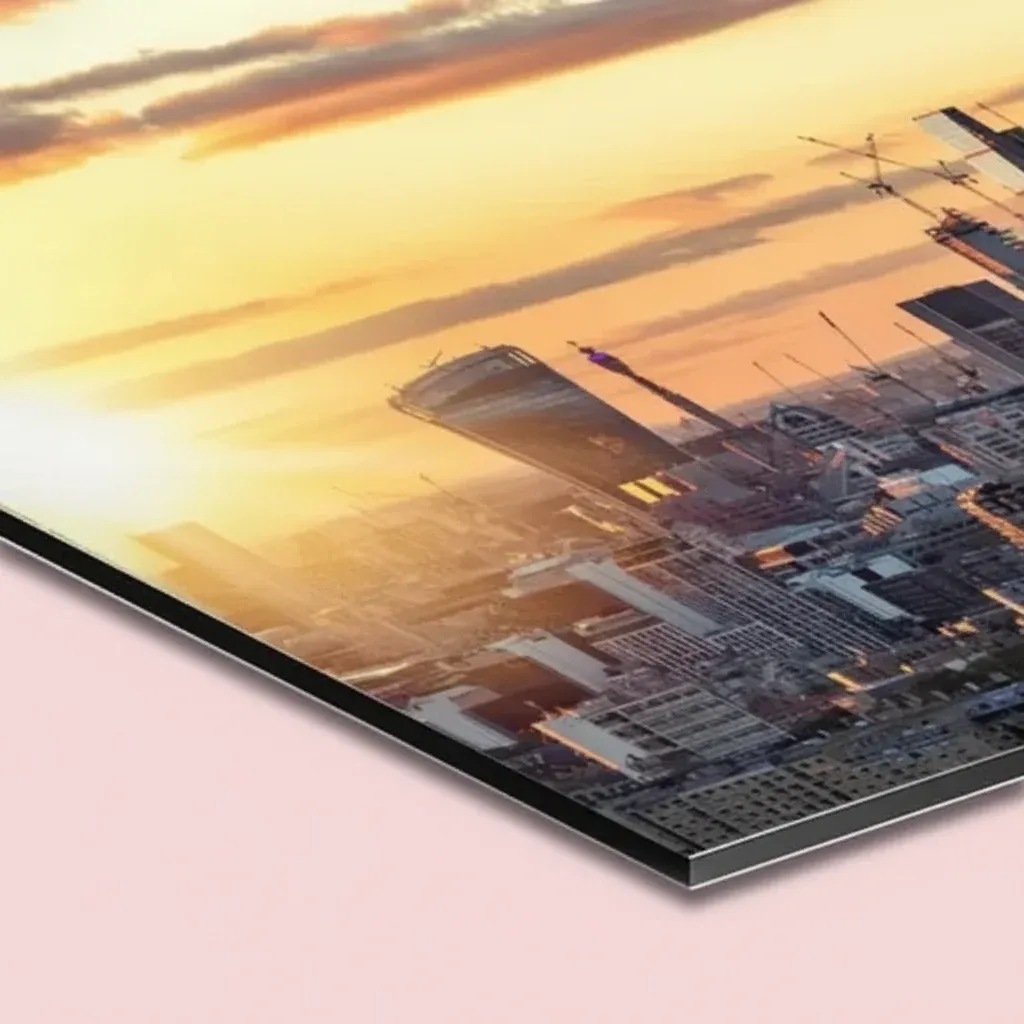
There is a category of signage application where the stakes are high enough that the material choice genuinely matters, where a sign that fades in its first season, warps under temperature variation, or simply does not look premium enough to represent the brand effectively is a failure with real commercial consequences. Shopfront fascias. Corporate reception graphics. Development site hoardings for major projects. External wayfinding in premium commercial and residential environments. These applications need a material built for the long term. Aluminium sign board is that material.
Why the Composite Construction Is the Secret
An aluminium composite board is engineered to combine strength, durability, and a high-quality print surface in a single material. Its layered construction makes it a dependable choice for signage applications that require long-term performance and a professional finish.
The Engineering Behind the Performance
Aluminium sign board, two aluminium skins bonded to a polyethylene core, sounds straightforward, and in some ways it is. But the combination of properties this construction delivers is genuinely difficult to achieve with a single-material alternative, which is why the composite format has become the professional standard for demanding signage applications.
Solid aluminium provides excellent rigidity but is heavy, difficult to handle, and expensive to produce in volume. Foam board is lightweight but lacks structural integrity for outdoor or large-format applications. Aluminium composite board delivers the rigidity of solid aluminium at a fraction of the weight, with a surface quality that accepts print with exceptional accuracy and a durability profile that suits both indoor and outdoor installation over extended periods.
The Visual Performance That Premium Applications Demand
For signage applications where visual quality is non-negotiable, aluminium sign board’s print surface is one of its most commercially important characteristics.
| Print Quality Factor | How Aluminium Sign Board Performs |
| Surface consistency | Flat, smooth, and even across the full board area |
| Colour accuracy | Accepts print with reliable, consistent colour reproduction |
| Edge sharpness | No surface texture to interfere with fine detail or typography |
| Finish options | Compatible with gloss, matt, brushed, and mirror effect surface treatments |
| UV stability | Treated surfaces maintain colour integrity under prolonged outdoor exposure |
For a brand where the sign above the door or at the development entrance is the first impression made on every visitor, client, or prospective buyer, this visual performance is not a specification detail, it is a brand reputation consideration.
Choosing the Right Finish for the Right Environment
The finish applied to a sign plays an important role in both its appearance and long-term performance. Choosing the right option helps achieve the desired visual effect while ensuring the signage remains suitable for its intended environment.
Matching Appearance to Performance
Selecting the right surface finish is just as important as choosing the material itself. The finish influences not only the appearance of the sign but also its readability, durability, and suitability for the environment in which it will be installed.
For example:
- Matt finishes minimise glare and are well suited to office branding, wayfinding, and locations with strong natural or artificial lighting.
- Gloss finishes enhance colour vibrancy and create greater visual impact, making them popular for retail signage and promotional displays.
- Brushed aluminium finishes provide a premium architectural appearance that complements corporate offices, hotels, and commercial developments.
- Mirror-effect finishes are often used selectively for decorative or feature signage where a distinctive visual statement is required.
Selecting the appropriate finish helps ensure the completed aluminium sign board not only complements the surrounding environment but also maintains its professional appearance throughout its service life.
Durability That Justifies Long-Term Investment
Long-term signage requires materials that continue to perform in demanding conditions without frequent maintenance or replacement. A durable construction helps preserve both the appearance and structural integrity of signs throughout years of indoor or outdoor use.
What “Long-Term” Actually Means in Signage Terms
Premium signage applications expect materials that maintain their appearance and structural integrity for five or more years without requiring replacement or significant maintenance. Aluminium composite board meets this expectation in ways that lower-cost alternatives consistently fail to.
- Weather resistance: the aluminium surface does not absorb moisture, preventing the warping and delamination that affects other substrates in outdoor exposure
- Temperature stability: the composite construction handles thermal expansion and contraction without surface cracking or joint failure
- UV resistance: quality board finishes maintain colour integrity through multiple seasons without the yellowing or fading that affects unprotected plastics
- Impact resistance: the rigid construction tolerates the handling, installation, and day-to-day proximity that real-world signage environments produce
Fabrication Versatility That Serves Complex Briefs
One of the genuinely useful characteristics of aluminium composite board for signage fabricators and installers is how predictably and cleanly it behaves during processing.
It cuts accurately with standard panel saws and routers. It drills cleanly for fixing points. It accepts fixings, standoffs, frame systems, through-bolts, without the material degradation that some substrates suffer at fixing locations. And it can be folded or bent using a routing and folding technique to create three-dimensional forms, letter trays, sign box returns, shaped panels, that rigid solid materials cannot achieve as cleanly.
For fabricators producing complex architectural signage systems, this versatility significantly expands what is achievable within a single material.
Environmental Responsibility: Aluminium That Goes Full Circle
For brands and specifiers with environmental accountability commitments, Aluminium sign board has a genuine sustainability story to tell. Aluminium is one of the most recyclable materials in commercial use, it can be recovered, remelted, and reprocessed repeatedly without significant loss of quality.
At the end of a sign’s working life, the aluminium component is fully recoverable. Combined with the longevity of the material, which reduces the replacement frequency and therefore the total material consumption over a building’s life, this makes aluminium sign board one of the more responsible choices available for long-term signage applications.
Conclusion
High-impact display applications deserve materials that are genuinely built for the task — not compromised by cost pressure or specified without regard for how the installation will look and perform after the first season of exposure. Aluminium sign board delivers the visual quality, structural integrity, fabrication versatility, and long-term durability that demanding signage applications require. Board Printing Company works with brands, agencies, and fabricators across the UK who want signage that makes the right impression from the first day of installation and keeps making it for years afterwards.
Author Name: Nimesh Kerai
Nimesh Kerai, the Head of Printing at the Board Printing Company, is a seasoned professional. His immaculate technical proficiency and habit of staying current with the advertising trends have helped the company reach impressive heights in the industry. He has amassed extensive knowledge throughout his career and often shares it with the general public in the form of intriguing and useful blog posts.