
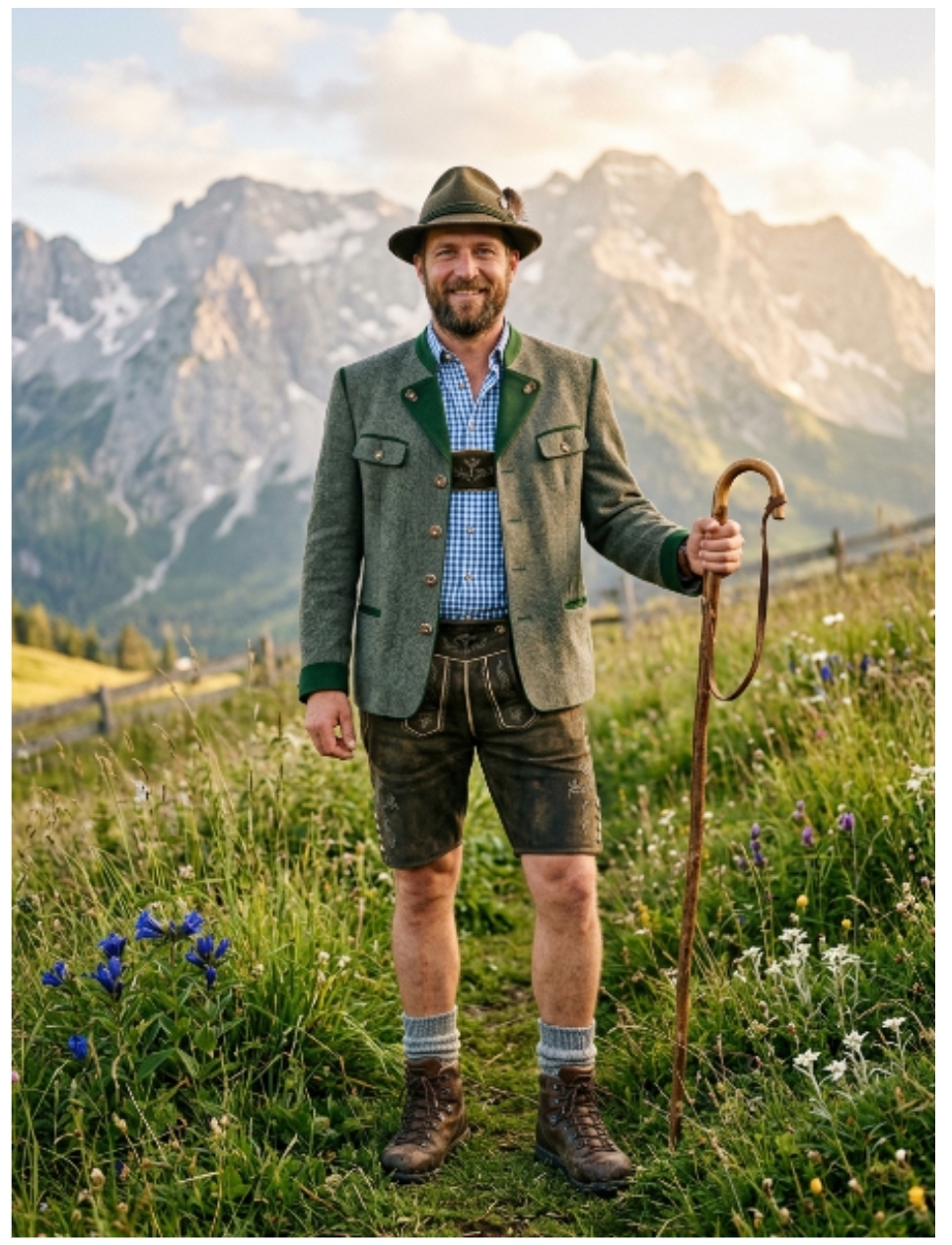
There is a visible line at every Bavarian event between attendees in festival outfits and attendees in traditional wardrobes, and the bavarian jacket is usually what draws it. Lederhosen and a checkered shirt make a festival outfit; add the wool jacket and the same pieces become Tracht — a complete traditional ensemble with the warmth, formality range, and finished silhouette the festival-only version lacks. For anyone whose Bavarian engagement has moved past a single annual party, the jacket is the upgrade that changes what the whole wardrobe can do: October evenings, formal invitations, Christmas markets, and ordinary autumn days all open up with one garment.
This guide covers the jacket styles the Bavarian tradition actually uses, the wool standard that defines quality, the fit rules the ensemble depends on, and the pairing logic that makes the jacket earn its price.
The Style Landscape: Janker, Walkjanker, and Formal Cuts
The Bavarian jacket tradition centers on three related styles. The classic Janker is the definitive piece: straight-cut, collarless or stand-collar, horn or metal buttons, contrast trim at edges and pockets — the silhouette instantly readable as Alpine from across a festival ground. Gray with green trim is its universal colorway; forest green, brown, and charcoal carry hunting and formal registers.
The Walkjanker executes the same idea in boiled wool — softer, more flexible, slightly casual — and has become the everyday favorite for beer gardens and daily autumn wear. Formal Trachten jackets extend the family upward: darker loden, finer finishing, sometimes velvet collar details, built for weddings, church festivals, and ceremonial occasions. A serious wardrobe eventually holds a classic Janker and often adds one of the other two as engagement deepens.
The Wool Standard That Separates Real From Imitation
Bavarian jackets are wool garments by definition, and the wool is where quality lives or dies. Loden — the dense, brushed, naturally water-resistant Alpine wool — is the traditional standard: warm without bulk, drizzle-shedding for outdoor events, matte and rich on camera, and durable across literal decades. Boiled wool offers the same fiber in a softer, springier construction.
The imitation tier substitutes acrylic and polyester fleece, and the failures are predictable: pilling within a season, soak-through in rain, synthetic shine in photographs, and none of the structure the silhouette requires. The specification line is the screen — genuine loden or boiled wool named explicitly — and honest 2026 pricing confirms it at roughly $90 to $180 for accessible quality and $180 to $350 for premium and formal versions.
Fit Rules the Ensemble Depends On
The Bavarian jacket has one fit rule that overrides all others: length. The hem must end at or just below the lederhosen waistband, leaving the leather, front flap, and suspender detailing visible. A jacket that covers the lederhosen erases the ensemble it exists to complete — the single most common mistake among buyers applying ordinary-jacket instincts.
The rest follows quickly. Shoulders sit exactly at the shoulder edge; the traditional cut runs straight and slightly boxy to layer over shirt and vest; modern-tailored versions slim the body while keeping traditional length and detailing. Sleeves end at the wrist bone with shirt cuff showing. Between sizes, fit the shoulders and confirm room for a shirt layer beneath.
Pairing Logic Across Bavarian Apparel
The jacket is a system piece, and its pairing follows the wider bavarian apparel logic of register and echo. Register first: gray-green Janker over gingham shirt and mid-brown leather is the complete festival look; dark loden over white Trachtenhemd and premium leather is the wedding configuration; Walkjanker over anything casual handles gardens, markets, and daily wear. Echo second: horn jacket buttons beside horn shirt buttons, green trim picking up sock flashes or hat cord, jacket worn open in warm tents so the suspender breastplate shows and buttoned against the evening cold.
The pairing extends across the household — women layer the same Janker styles over dirndl with the identical length rule, hem above the apron bow — which is why a single well-chosen jacket often becomes the most-borrowed garment in a Bavarian wardrobe.
The Crossover Dividend
Among all Trachten pieces, the Bavarian jacket alone pays a genuine everyday dividend. A gray or green Janker over a plain sweater and dark jeans reads as distinguished autumn outerwear anywhere in the world — Alpine heritage as texture rather than costume. That crossover changes the cost-per-wear arithmetic completely: the jacket that serves three Bavarian events a year can also serve thirty ordinary autumn days, which no lederhosen or dirndl purchase can claim. For buyers hesitating at the category’s price point, the crossover is the honest justification.
Buying and Keeping It for Decades
Two practical notes close the purchase. Timing: jacket stock in common sizes thins from late August as festival season approaches, and premium loden sells through first — order by midsummer for full selection in 2026. Care: loden wants almost nothing — brush after wear, air rather than wash, spot-clean spills, dry-clean rarely, store on a shaped hanger with cedar. Treated that way, a quality Bavarian jacket runs twenty to forty years, and inherited Janker remain common in Bavarian families precisely because the garment outlasts its first owner’s festival calendar.
Frequently Asked Questions
What’s the difference between a Janker and a Walkjanker?
The Janker is the classic structured loden jacket; the Walkjanker is the softer boiled-wool version that leans casual and everyday.
Which colorway should a first jacket be?
Gray with green trim — it pairs with every leather tone, shirt pattern, and register from festival through semi-formal.
How long should a Bavarian jacket be?
Hem at or just below the lederhosen waistband; the leather and suspenders must stay visible.
What separates authentic quality from imitation?
Genuine loden or boiled wool in the specification. Acrylic fleece fails in weather, wear, and photographs.
Can the jacket be worn outside Bavarian events?
Yes — over ordinary autumn clothes a Janker reads as distinguished heritage outerwear, the category’s real crossover value.
What should I budget in 2026?
$90 to $180 for accessible genuine-wool tiers; $180 to $350 for premium loden and formal versions.