
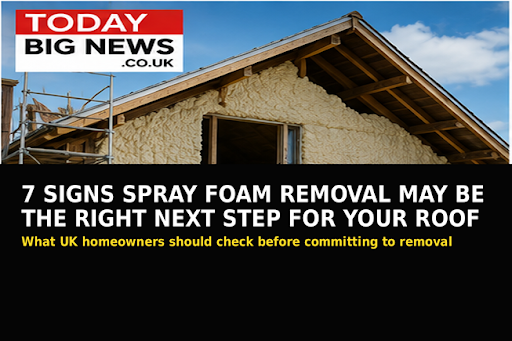
Spray foam insulation does not automatically mean a roof is damaged or that removal is essential. But there are situations where leaving it in place creates uncertainty, prevents proper inspection or allows an existing roof problem to remain hidden. For UK homeowners, the useful question is not simply “is spray foam bad?” but “what is happening in this particular roof?”
That evidence-first approach is consistent with RICS guidance on spray foam insulation, which treats spray foam as a significant alteration to a property and recommends proper assessment rather than blanket assumptions. If any of the warning signs below apply, a specialist inspection is a sensible next step.
1. The roof timbers cannot be properly inspected
Spray foam bonds to rafters and the underside of the roof. If large areas of timber are concealed, a surveyor may be unable to assess their condition. This becomes particularly important before a sale, remortgage or major roof repair.
Where the foam genuinely needs to come out, careful spray foam removal from the roof should expose the timber without turning a manageable issue into unnecessary structural damage. The aim is an inspectable roof, not simply a loft that looks tidier.
2. There are visible signs of damp or moisture
Dark staining, mould, musty smells, condensation on fixings or soft timber deserve investigation. Moisture can arise for many reasons, including roof leaks and inadequate ventilation, so spray foam should not automatically be blamed. However, foam may make it harder to see how far a problem extends.
Government-commissioned research into moisture risk in spray-foam-insulated roofs found that risk depends heavily on the roof build-up, the type of underlay, whether an air and vapour control layer is present and whether foam has been applied directly to the roof covering.
3. The foam was sprayed directly onto tiles or slates
This is one of the configurations that deserves particular attention. If foam has been applied directly to the roof covering, it can make future tile replacement more difficult and can conceal battens, fixings and other components. The 2024 government research identified direct-to-roof-covering applications as the highest-risk group among the scenarios it modelled.
4. You have no installation paperwork
A good installation should leave a record of the product used, how the roof was prepared and what moisture-control measures formed part of the design. If none of this exists, a surveyor has less information with which to assess the roof. Unknown foam type plus unknown underlay plus no design record can turn a straightforward loft into a much harder property question.
5. A lender or surveyor has specifically raised the foam
Mortgage policies vary, and removal is not a universal requirement. But if a lender or valuer will not proceed because the roof structure cannot be satisfactorily assessed, removing the obstruction may become a practical transaction decision rather than a theoretical building debate.
Before committing, ask what evidence will be required after the work. Photographs, a record of the removal method, details of any timber repairs and an independent post-removal inspection can all be more useful than a contractor simply stating that the loft has been cleared.
6. Previous removal has left patches and damaged timber
Partial removal can create a new problem. Heavy residue around rafters may still restrict inspection, while aggressive scraping can gouge the timber or damage roof membranes. If a previous attempt has left the structure in an unclear condition, a specialist may need to finish the detailing and document the result.
7. You are planning roofing work anyway
If the roof is approaching the end of its life, has recurring leaks or requires membrane work, it may make sense to address the spray foam as part of the same project. Coordinating removal with genuine roof repairs is usually more logical than paying to expose the structure and then covering up known defects.
What a good removal job should achieve
The best outcome is not “all foam gone at any cost”. It is a roof that is visible, dry, structurally sound and straightforward to inspect. A proper job should preserve serviceable timbers, identify any defects revealed underneath, restore appropriate ventilation and leave useful photographic evidence.
Homeowners comparing contractors should also understand what spray foam removal costs in the UK. Price varies with roof area, foam type, access and the condition found underneath, so the cheapest headline figure is rarely enough information on its own.
Do not let urgency replace diagnosis
Spray foam has attracted plenty of alarming headlines, but fear is a poor basis for roofing decisions. Some roofs will need removal; others may only need better documentation or further inspection. Start with the evidence, identify the actual obstacle and then carry out the minimum work necessary to leave the roof safe, visible and properly documented.